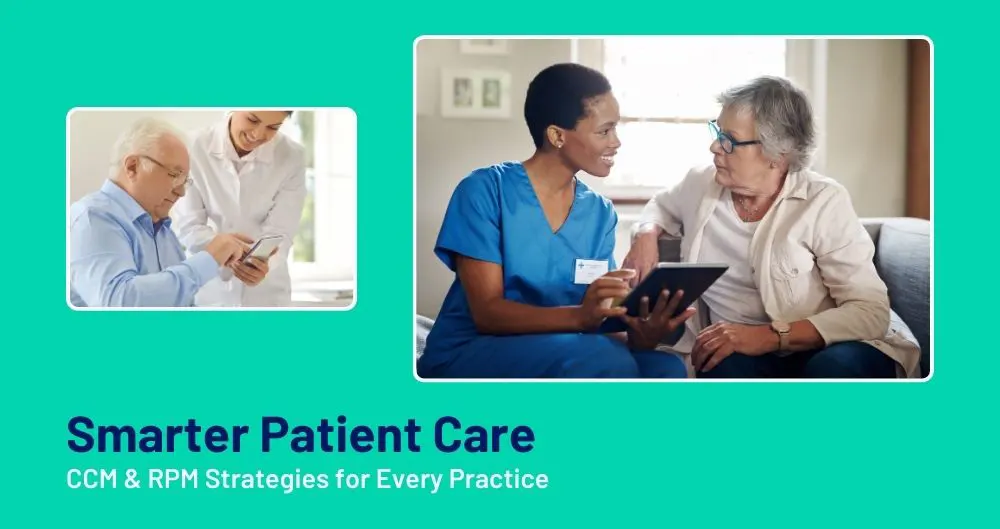
Smarter Patient Care: Effective CCM and RPM Strategies for Every Practice
Many patients live with ongoing conditions such as diabetes, high blood pressure, or heart disease. These conditions don’t just need occasional visits — they require continuous monitoring and support.
For practices, this creates two challenges:
-
Keeping patients healthy outside of office visits.
-
Managing the added workload of follow-ups, documentation, and compliance.
That’s where CCM and RPM programs come in. Together, they help practices deliver better care while also improving efficiency and revenue.
CCM vs. RPM — and How They Work Together
-
CCM (Chronic Care Management): Focuses on planning, coordinating, and guiding long-term care for patients with chronic illnesses. It involves monthly check-ins, medication management, and care planning.
-
RPM (Remote Patient Monitoring): Uses connected devices (like blood pressure cuffs, glucose monitors, or weight scales) to collect patient health data at home. This information is sent to the care team in real time.
➡️ Together: CCM builds the overall care plan, while RPM provides live health updates. This allows providers to intervene earlier, prevent complications, and keep patients engaged.
Key Strategies for a Successful Program
1. Educate and Enroll Patients
Clearly explain the benefits of CCM and RPM. Patients should know how the program works, what devices they’ll use, and that they can opt out anytime.
2. Choose the Right Technology
Select devices and software that are easy for patients to use and that integrate smoothly with your clinical workflow.
3. Train Your Staff
Make sure your team knows how to respond to data alerts, update care plans, and communicate effectively with patients.
4. Establish Clear Protocols
Set processes for reviewing data, following up with patients, and documenting care activities to stay compliant.
5. Track and Adjust
Use the data to see what’s working and make changes as needed. Look at patient outcomes, hospitalizations, and staff workload.
Key Strategies for a Successful Program
- Patients: Get more consistent support, early detection of problems, and reassurance knowing their care team is always watching.
- Providers: Can manage larger patient panels more effectively, reduce preventable hospital visits, and align with value-based care models.
- Staff: Workload becomes more predictable and less reactive, thanks to structured processes and real-time data.
✅ Bottom line: CCM and RPM are not just add-on services — together they create a foundation for modern, patient-centered care.
WellWink Health, LLC is a leading technology company that specializes in providing innovative solutions for the healthcare industry. With a dedicated focus on patient engagement and care coordination (CCM/RPM), our mission is to empower medical practices and healthcare facilities to deliver exceptional patient experiences and improve overall health outcomes.
To get in touch call us right now at (848)-291-2430 to learn more about our CCM program or you can also book a 30 min free consultation.
Tags:
You may also like
Guide to 2025 Remote Therapeutic Monitoring CPT Codes
As healthcare continues to evolve toward value-based care, Remote Therapeutic Monitoring (RTM) has become an increasingly important tool for providers and patients. RTM enables clinicians to monitor a patient’s progress outside of the traditional clinical setting,...
Recommended Groups for Care Management Programs
Imagine you’re a doctor or nurse, and you want to help people stay healthy and avoid those dreaded hospital visits. One of the most important things you can do is figure out which patients need extra care—the ones who would benefit the most from a care management...

Advanced Primary Care Management (APCM) Made Simple
Imagine this: You go to your doctor, and instead of juggling a handful of programs—one for chronic care, another for hospital follow-ups, and yet another for virtual check-ins—everything is rolled into one simple package. That’s Advanced Primary Care Management...