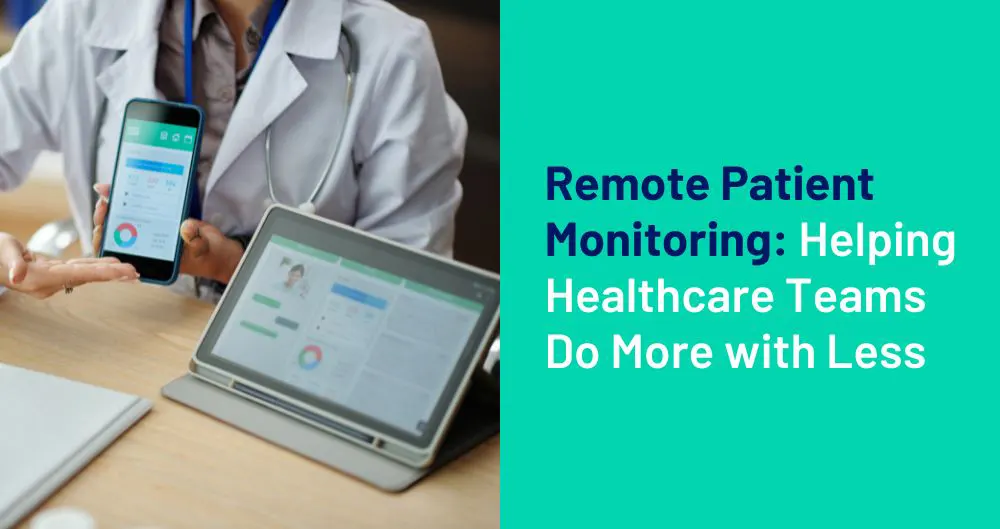
Remote Patient Monitoring: Bridging the Gap in Clinical Staffing
Staff shortages in healthcare are nothing new, but the COVID-19 pandemic made things even harder. Many care workers retired or left their jobs, leaving hospitals short-staffed. In fact, 16% of U.S. hospitals report severe staffing shortages. Add to that stricter immigration policies and the pull of high-paying travel nurse jobs, and it’s no wonder the gap keeps growing.
This is where Remote Patient Monitoring (RPM) comes in. It’s proving to be a game-changer for hospitals and clinics struggling with too few hands on deck.
How RPM Is Expanding Healthcare at Home
During and after COVID-19, more health systems turned to technology like RPM. Instead of requiring patients to come to the clinic, these tools let doctors and nurses keep track of patients right in their homes. RPM has been especially effective for managing chronic conditions such as kidney disease, COPD, and heart disease.
For healthcare organizations, adopting RPM is also financially smart—it opens up opportunities for Medicare reimbursement by covering services like device setup, patient training, and data review. This saves clinicians’ time and keeps the focus where it should be: on patient care.
What the Evidence Shows
One study found that an RPM program successfully managed more than 1,200 patients across 18 programs using a central nursing team. Nurses monitored health data in real time and adjusted treatment plans right away. Another study showed that nurses in NICUs (Neonatal Intensive Care Units) had more time to answer patient questions and build trust when RPM was in place.
Even with only a few nurses monitoring, patients stayed safer, communication improved, and staff had more time to focus on care instead of paperwork.
Why Clinical Staff Love RPM
RPM isn’t just about helping patients—it’s also about making work easier and more fulfilling for care teams. Here’s how:
Smarter Workflows
No more mountains of paperwork—data is tracked automatically.
If something looks off, the system flags it right away, so staff can act faster.
Nurses and doctors can monitor several patients at once, without burnout.
More Patient Connections RPM makes it easier for patients to stay in touch with providers through apps, calls, or video chats. This reduces the need for lengthy, in-person visits while still providing patients with prompt answers.
Better Outcomes Small changes in vital signs get noticed early, meaning patients get the right care before problems get worse. Faster interventions = healthier patients.
Saving Resources RPM reduces the need for expensive ER visits and hospital stays. Staff can handle more patients with fewer resources.
Happier Staff With less pressure to juggle paperwork and constant admin tasks, nurses and doctors can focus on what they love most—caring for people. Less stress, more job satisfaction.
Remote Patient Monitoring is no longer a “nice-to-have.” It’s becoming essential for healthcare organizations that want to deliver high-quality care while dealing with staffing shortages. It helps staff save time, reduce stress, and improve patient outcomes—all while making better use of limited resources.
In short, RPM bridges the staffing gap, empowers healthcare workers, and gives patients better care from the comfort of their homes.
WellWink Health, LLC is a leading technology company that specializes in providing innovative solutions for the healthcare industry. With a dedicated focus on patient engagement and care coordination (CCM/RPM), our mission is to empower medical practices and healthcare facilities to deliver exceptional patient experiences and improve overall health outcomes.
To get in touch call us right now at (848)-291-2430 to learn more about our CCM program or you can also book a 30 min free consultation.
Tags:
You may also like
Guide to 2025 Remote Therapeutic Monitoring CPT Codes
As healthcare continues to evolve toward value-based care, Remote Therapeutic Monitoring (RTM) has become an increasingly important tool for providers and patients. RTM enables clinicians to monitor a patient’s progress outside of the traditional clinical setting,...
Recommended Groups for Care Management Programs
Imagine you’re a doctor or nurse, and you want to help people stay healthy and avoid those dreaded hospital visits. One of the most important things you can do is figure out which patients need extra care—the ones who would benefit the most from a care management...
Advanced Primary Care Management (APCM) Made Simple
Imagine this: You go to your doctor, and instead of juggling a handful of programs—one for chronic care, another for hospital follow-ups, and yet another for virtual check-ins—everything is rolled into one simple package. That’s Advanced Primary Care Management...