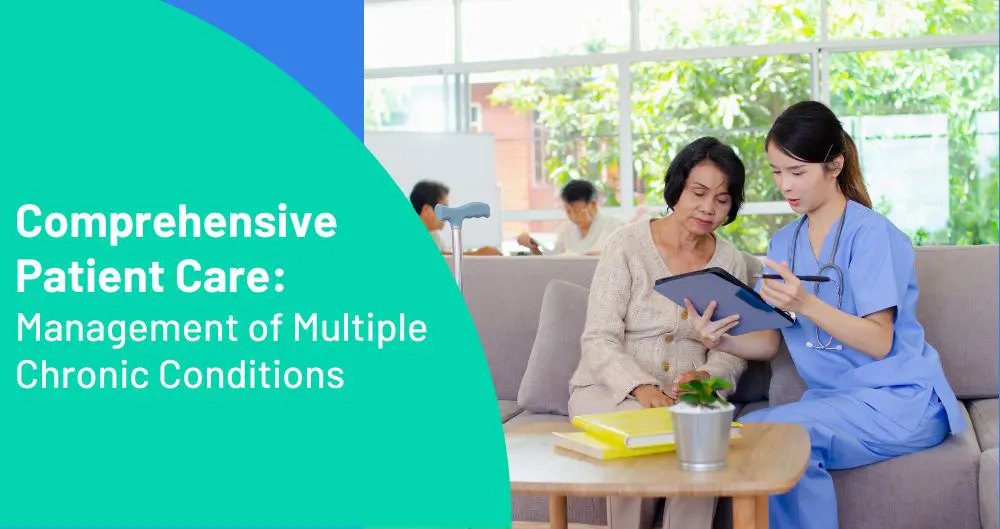
Comprehensive Patient Care: Management of Multiple Chronic Conditions
Why It’s Important?
People with one chronic illness are far more likely to develop another. For example, a patient with diabetes may later be diagnosed with heart disease or kidney problems. This growing health burden impacts both physical well-being and emotional health.
In the United States, more than half of adults live with at least one chronic disease, and nearly one-third manage two or more. The likelihood is even higher among older adults, women, individuals with lower income, and those in rural areas where healthcare services may be harder to reach.
- Individualized Care Plans
- Coordinated Care Across Specialists
- Integration of Mental Health
- Support from Family and Community
- Patient Education and Empowerment
- Continuous Communication
In Summary
Managing multiple chronic illnesses requires a holistic, connected approach. The most successful care programs are those that:
-
Recognize the patient as a whole person, not just a set of conditions,
-
Ensure all providers work from the same playbook,
-
Incorporate mental health as a core component of treatment,
-
Engage families and communities as partners,
-
Teach patients to take control of their health, and
-
Maintain regular, accessible communication.
This model not only improves medical outcomes but also enhances the quality of life for patients navigating the challenges of multiple chronic conditions.
WellWink Health, LLC is a leading technology company that specializes in providing innovative solutions for the healthcare industry. With a dedicated focus on patient engagement and care coordination (CCM/RPM), our mission is to empower medical practices and healthcare facilities to deliver exceptional patient experiences and improve overall health outcomes.
To get in touch call us right now at (848)-291-2430 to learn more about our CCM program or you can also book a 30 min free consultation.
Tags:
You may also like
Guide to 2025 Remote Therapeutic Monitoring CPT Codes
As healthcare continues to evolve toward value-based care, Remote Therapeutic Monitoring (RTM) has become an increasingly important tool for providers and patients. RTM enables clinicians to monitor a patient’s progress outside of the traditional clinical setting,...
Recommended Groups for Care Management Programs
Imagine you’re a doctor or nurse, and you want to help people stay healthy and avoid those dreaded hospital visits. One of the most important things you can do is figure out which patients need extra care—the ones who would benefit the most from a care management...
Advanced Primary Care Management (APCM) Made Simple
Imagine this: You go to your doctor, and instead of juggling a handful of programs—one for chronic care, another for hospital follow-ups, and yet another for virtual check-ins—everything is rolled into one simple package. That’s Advanced Primary Care Management...