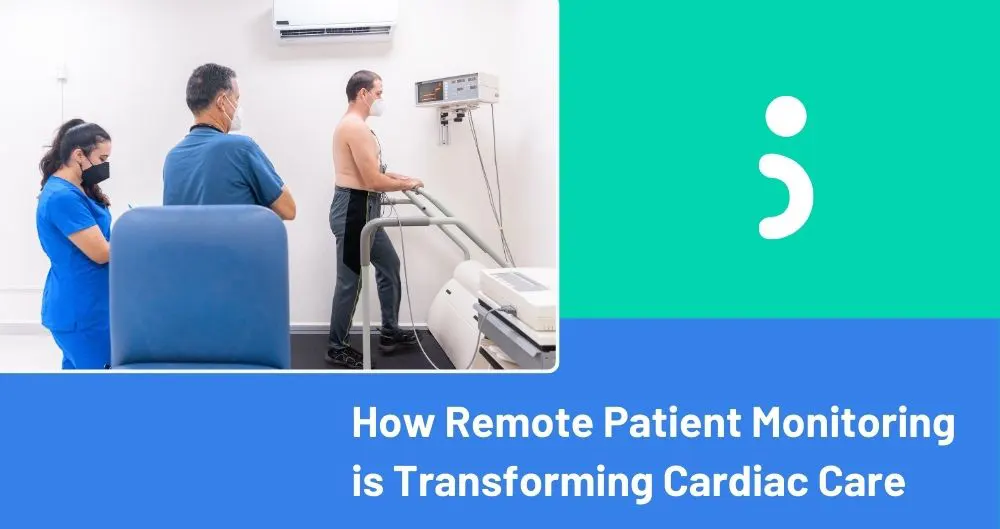
How Remote Patient Monitoring is Transforming Cardiac Care
Heart disease remains one of the most serious health challenges in the United States. The American Heart Association reports that nearly half of Americans are suffering from some form of cardiovascular disease., and one person dies from it every 36 seconds. The financial impact is staggering too—cardiovascular disease costs the U.S. more than $360 billion every year.
Hypertension and atrial fibrillation are major contributors to this crisis. In 2019 alone, high blood pressure was the primary or contributing cause of death for more than 500,000 Americans. It’s clear why the Centers for Medicare and Medicaid Services (CMS) continues to encourage innovative solutions like Remote Patient Monitoring (RPM) to prevent and better manage cardiac conditions.
Staying Connected Through RPM
Remote Patient Monitoring (RPM) uses connected devices to track patients’ vitals—such as blood pressure, glucose levels, and weight—between office visits. These readings are sent directly to the provider’s system, giving physicians a continuous, real-time view of their patients’ health.
This connectivity allows doctors to step in early, adjusting medications or care plans before problems become emergencies. And patients appreciate the convenience—nearly 8 in 10 physicians (78%) say they expect patient demand for virtual care to keep growing, with 84% already offering or planning to offer virtual visits.
Hypertension Management
Hypertension is a key public health concern. The American Heart Association urges patients to monitor blood pressure at home and share results with their doctors. Clinical studies confirm RPM’s effectiveness:Patients using RPM saw systolic blood pressure drop by 5 points in 3 months and 7 points in 7 months.
Systolic blood pressure decreases by 16.9mmHg and diastolic blood pressure drops by an average of 6.5mmHg after RPM.
Over 5 years, only 3% of RPM patients experienced heart attacks or hospitalizations for heart failure—compared to 10.4% in the usual care group.
Home BP monitoring also led to more appropriate adjustments of antihypertensive medications.
Preventing Heart Failure Complications
Heart failure affects 6.2 million Americans and has a troubling 42% five-year mortality rate. Hospital readmissions within 30 days are as high as 23%.
RPM helps prevent these complications by tracking blood pressure and weight changes (an early warning sign of fluid buildup and flare-ups). Physicians can then intervene promptly with treatment changes—often avoiding hospital stays altogether.
Research highlights include:
-
Home telemonitoring reduces mortality (risk ratio = 0.64).
-
70% of patients using telemonitoring completed at least 80% of daily readings.
-
Compared to standard care, telemonitoring lowered risks of both hospitalizations (0.64–0.86) and all-cause mortality (0.60–0.85).
-
Structured phone support increased patient satisfaction, engagement, and self-care.
Revolutionizing Standards of Cardiac Care
RPM doesn’t just track blood pressure—it also monitors pulse rate. Pulse irregularities can indicate arrhythmias, anxiety, medication side effects, or conditions like atrial fibrillation (AFib) and ventricular fibrillation (VFib). Detecting these issues early can lead to timely interventions, including medication adjustments, EKGs, or even pacemaker placement.
By combining blood pressure and pulse monitoring, RPM gives providers the tools to prevent severe complications like stroke and heart failure—while also enabling practices to deliver preventive care outside of office visits and receive reimbursement.
WellWink Health, LLC is a leading technology company that specializes in providing innovative solutions for the healthcare industry. With a dedicated focus on patient engagement and care coordination (CCM/RPM), our mission is to empower medical practices and healthcare facilities to deliver exceptional patient experiences and improve overall health outcomes.
To get in touch call us right now at (848)-291-2430 to learn more about our CCM program or you can also book a 30 min free consultation.
Tags:
You may also like

Guide to 2025 Remote Therapeutic Monitoring CPT Codes
As healthcare continues to evolve toward value-based care, Remote Therapeutic Monitoring (RTM) has become an increasingly important tool for providers and patients. RTM enables clinicians to monitor a patient’s progress outside of the traditional clinical setting,...

Recommended Groups for Care Management Programs
Imagine you’re a doctor or nurse, and you want to help people stay healthy and avoid those dreaded hospital visits. One of the most important things you can do is figure out which patients need extra care—the ones who would benefit the most from a care management...

Advanced Primary Care Management (APCM) Made Simple
Imagine this: You go to your doctor, and instead of juggling a handful of programs—one for chronic care, another for hospital follow-ups, and yet another for virtual check-ins—everything is rolled into one simple package. That’s Advanced Primary Care Management...