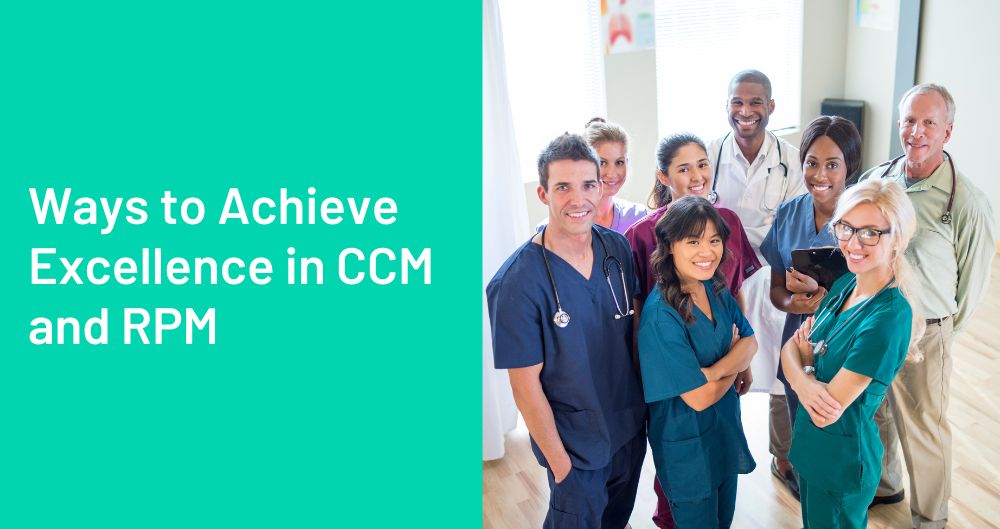
Ways to Achieve Excellence in Chronic Care Management and Remote Patient Monitoring
According to the CDC, 60% of Americans live with at least one chronic condition. These patients need consistent support—and while practices can spend hours each week on research, phone calls, and documentation to qualify for Medicare reimbursement, there’s a better way.
Chronic Care Management (CCM) and Remote Patient Monitoring (RPM) allow practices to outsource much of this work. With the right partner, staff don’t have to handle patient education, enrollment, monthly check-ins, reporting, or billing themselves. The result? Better patient outcomes and new, reliable revenue streams.
Why do Many Practices Underuse Underuse CCM and RPM?
Even though CCM and RPM programs are powerful, many practices don’t take full advantage of them. Common reasons include:
1. Not integrating CCM/RPM into the care model
Some treat these programs as “extras” rather than tools that improve patient outcomes. Without proper integration, providers miss the real benefits.
2. Sticking to old communication habits
Many teams still do their own patient follow-ups, even when a third-party provider could handle them more efficiently.
3. Underutilizing the provider’s resources
CCM/RPM providers offer advanced monitoring, care coordination, and reporting. If practices don’t fully leverage these services, they end up doing more work than necessary.
In short, failing to use your CCM/RPM partner effectively is like hiring a skilled team member but only letting them do the bare minimum.
How to Unlock the Full Potential ofCCM and RPM
To get the most value, practices must view their CCM/RPM provider as an extension of their team. The most successful practices do this by:Building an Integrated Care Delivery System—Make CCM and RPM part of your standard operations. When done right, these programs support value-based care that reduces hospitalizations and ER visits.
Improving Communication Workflows—Let your CCM/RPM provider handle regular patient follow-ups. At Gen By Gen Health, for example, our trained care coordinators focus on Medicare patients with professionalism, empathy, and consistency.
Utilize Proactive Monitoring – Care coordinators often notice changes in patient behavior before a crisis develops. By keeping a constant eye on data and conducting routine check-ins, they can catch issues early—long before they turn into emergencies.
When practices fully integrate CCM and RPM, they don’t just lighten their staff’s workload—they create smoother workflows, stronger patient relationships, and better health outcomes.
Patients are more likely to open up, share vital details about their health, and stay engaged in their care. And practices benefit from both improved outcomes and stronger financial performance.
CCM and RPM aren’t just programs—they’re a smarter way to deliver care.
WellWink Health, LLC is a leading technology company that specializes in providing innovative solutions for the healthcare industry. With a dedicated focus on patient engagement and care coordination (CCM/RPM), our mission is to empower medical practices and healthcare facilities to deliver exceptional patient experiences and improve overall health outcomes.
To get in touch call us right now at (848)-291-2430 to learn more about our CCM program or you can also book a 30 min free consultation.
You may also like
Why Independent Practices Need to Survive and Thrive
Independent practices (offices owned by the doctors themselves) are being bought up by large hospital chains and investment firms. The Numbers: In 2012, nearly half of all doctors owned their own practice. By 2018, that dropped to about 31%. Rural Areas: Small towns...
Guide to 2025 Remote Therapeutic Monitoring CPT Codes
As healthcare continues to evolve toward value-based care, Remote Therapeutic Monitoring (RTM) has become an increasingly important tool for providers and patients. RTM enables clinicians to monitor a patient’s progress outside of the traditional clinical setting,...
Recommended Groups for Care Management Programs
Imagine you’re a doctor or nurse, and you want to help people stay healthy and avoid those dreaded hospital visits. One of the most important things you can do is figure out which patients need extra care—the ones who would benefit the most from a care management...