
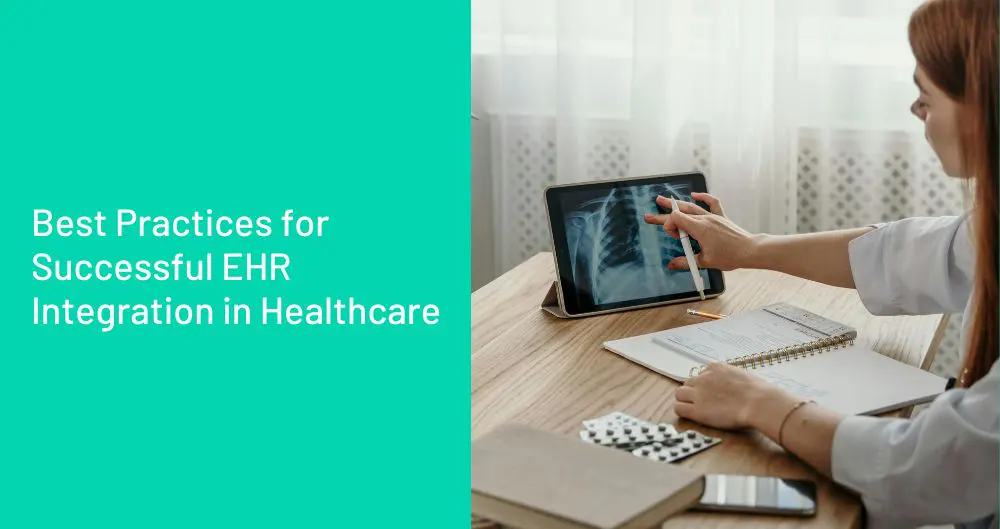
Best Practices for Successful EHR Integration in Healthcare
Prioritize Interoperability in EHR Selection
The first step in a successful EHR integration is selecting a system that supports interoperability—meaning it can easily exchange information with other technologies. Healthcare organizations should:Choose EHR platforms that are based on widely adopted standards such as FHIR (Fast Healthcare Interoperability Resources) and HL7 (Health Level 7). These systems are designed for seamless data transfer across diverse healthcare systems and ensure compatibility with other healthcare technologies.
Opt for EHR systems that come with robust data-sharing capabilities, facilitating easy integration with telehealth platforms, remote patient monitoring (RPM) tools, and other virtual care solutions.
Evaluate Vendor Support and Reliability
The vendor you choose can make or break the success of your EHR implementation. Here’s how organizations can ensure they select the right partner:Conduct thorough research on potential vendors, including customer reviews, satisfaction ratings, and case studies from other healthcare providers that have used the system. This helps in understanding the vendor’s track record.
Verify that the vendor offers full support, including comprehensive training, timely software updates, and dedicated technical support, to ensure smooth ongoing operation after deployment.
Engage Healthcare Providers and IT Staff in the Process
A successful EHR integration requires the active participation of all relevant stakeholders, particularly healthcare providers and IT teams. To ensure alignment:Assemble a cross-functional team involving doctors, nurses, IT staff, and administrative personnel. Collaboration across these groups fosters better communication and problem-solving during the integration process.
Set clear expectations for each stakeholder involved in the integration, ensuring everyone understands their responsibilities and contributions to the project.
Solicit and Act on Patient Feedback
Patient experience is a key component of EHR success, so gathering and addressing feedback from patients is critical. Organizations should:Solicit patient input on their interactions with the EHR system, focusing on areas that impact their communication with healthcare providers and their access to care. This helps identify opportunities for improvement.
Consider incorporating patient suggestions into future EHR updates or redesigns to enhance usability, ensuring the system meets the needs of those it serves.
Provide Comprehensive Training Programs
For EHR integration to be successful, staff must be proficient in using the new system. To facilitate this:Tailor training programs to the specific needs of different staff roles. Clinicians, administrative staff, and IT personnel will all need to focus on different aspects of the system, so training should be role-specific.
Offer training in various formats, including in-person sessions, online tutorials, and hands-on practice, ensuring that staff members are comfortable and confident in using the system.
Foster a Culture of Continuous Learning
As healthcare technologies evolve, ongoing education is necessary to keep staff up to date. Organizations should:Schedule periodic training sessions that allow staff to refresh their skills, learn about new system features, and stay current with technological advances.
Encourage a learning culture where team members are empowered to share tips, suggestions, and feedback. This collaborative approach promotes continuous improvement and supports effective use of the EHR system.
Conclusion
Integrating an EHR system into a healthcare setting requires thoughtful planning and execution. By focusing on interoperability, vendor reliability, stakeholder engagement, patient feedback, and ongoing staff training, organizations can ensure that their EHR implementation supports high-quality, efficient care delivery. When done right, EHR integration not only improves clinical outcomes but also enhances the overall patient experience and supports long-term organizational growth.WellWink Health, LLC is a leading technology company that specializes in providing innovative solutions for the healthcare industry. With a dedicated focus on patient engagement and care coordination (CCM/RPM), our mission is to empower medical practices and healthcare facilities to deliver exceptional patient experiences and improve overall health outcomes.
To get in touch call us right now at (848)-291-2430 to learn more about our CCM program or you can also book a 30 min free consultation.
You may also like

Why Independent Practices Need to Survive and Thrive
Independent practices (offices owned by the doctors themselves) are being bought up by large hospital chains and investment firms. The Numbers: In 2012, nearly half of all doctors owned their own practice. By 2018, that dropped to about 31%. Rural Areas: Small towns...
Guide to 2025 Remote Therapeutic Monitoring CPT Codes
As healthcare continues to evolve toward value-based care, Remote Therapeutic Monitoring (RTM) has become an increasingly important tool for providers and patients. RTM enables clinicians to monitor a patient’s progress outside of the traditional clinical setting,...

Recommended Groups for Care Management Programs
Imagine you’re a doctor or nurse, and you want to help people stay healthy and avoid those dreaded hospital visits. One of the most important things you can do is figure out which patients need extra care—the ones who would benefit the most from a care management...