REMOTE PATIENT MONITORING
Create and manage RPM programs and enhance your revenue bottom line.
As the healthcare industry evolves, we aim to offer the most comprehensive, patient-centered, and interconnected care platform. Our Remote Patient Monitoring system enables doctors and medical teams to efficiently monitor multiple patients and effectively manage chronic conditions.
Request a Demo

Home Care Devices
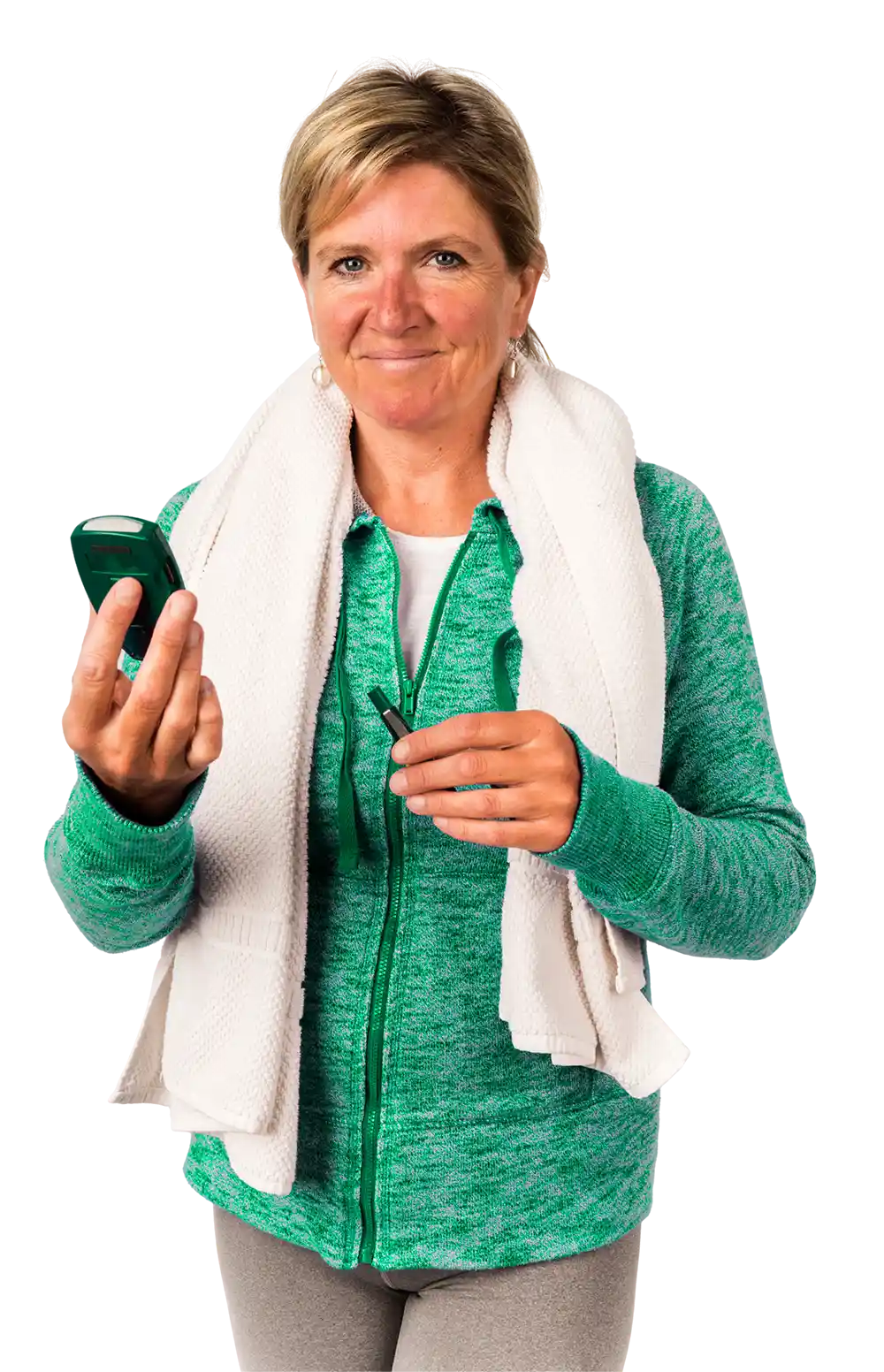
Cell-based and Bluetooth-connected device (e.g., scales, BG and BP monitors, etc.) allow patients to measure health metrics at the comforts of their homes.
Monitoring and Intervention
Automatic identification of critical and high values triggered by patient specific rules can effectively notify the care coordinator to take action and propose intervention appropriately.
User Friendly Experience
ClinicalView offers a patient portal and mobile app, a simple, intuitive, and efficient system specifically designed for elderly patients, and a senior-friendly platform. It provides the best user interface.
Track Clinical Tasks
Assign patient care tasks to clinical team members. Clinicians can utilize task lists to enhance clinical efficiency. Management can monitor care performance.

Health Metrics
The Devices We Use in RPM Program
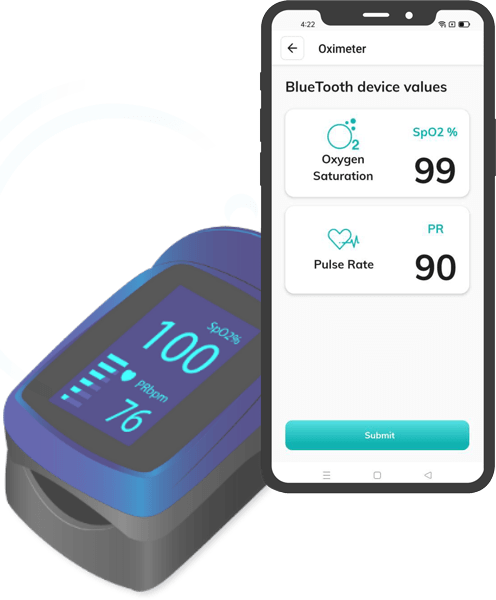
Trusted by doctors and FDA-approved, the Pulse Oximeter gives you fast, accurate vital signs readings right from your smartphone or tablet. Measure, track, and share your blood oxygen saturation, pulse rate, and perfusion index right from your touchscreen.Pulse Oximeter
Features
Integration
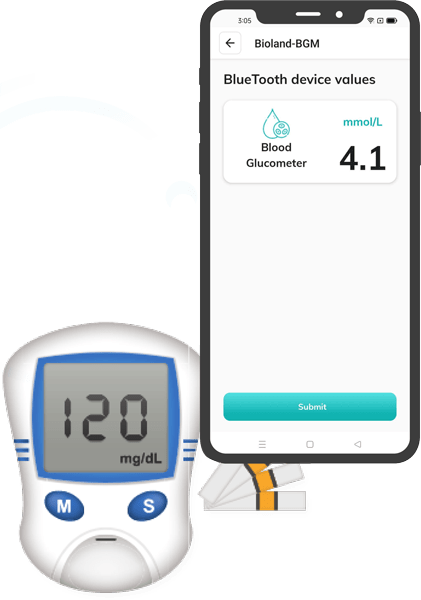
This lightweight, portable glucometer works with the WellWink app to measure and record your readings automatically and lets you share them with your doctor or family members right from your touchscreen.Wireless Smart Gluco-Monitoring System
Features
Integration
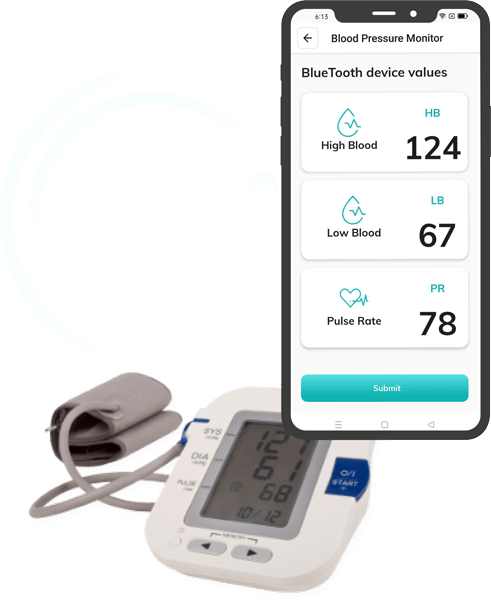
Take control of your health with accurate BP readings anytime, anywhere, right from your smartphone or tablet. Our technology measures, store, and track your blood pressure virtually and effortlessly.Blood Pressure Monitor
Features
Integration
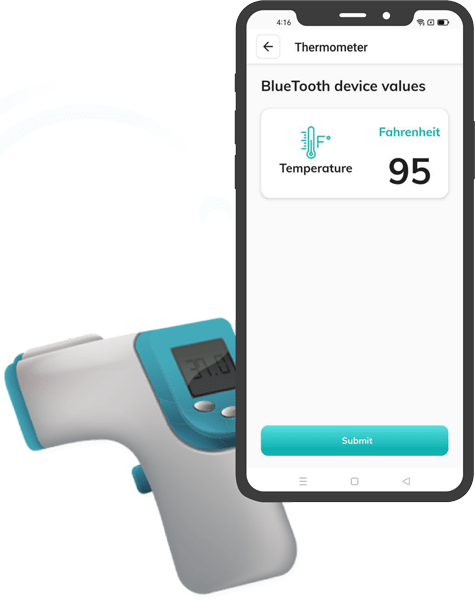
Thermometer
Take control of your health with the Wireless No-Touch Forehead Thermometer. It is necessary to be aware of each individual's normal temperature when they are good in health. This helps to accurately diagnose a fever.
Features
Integration
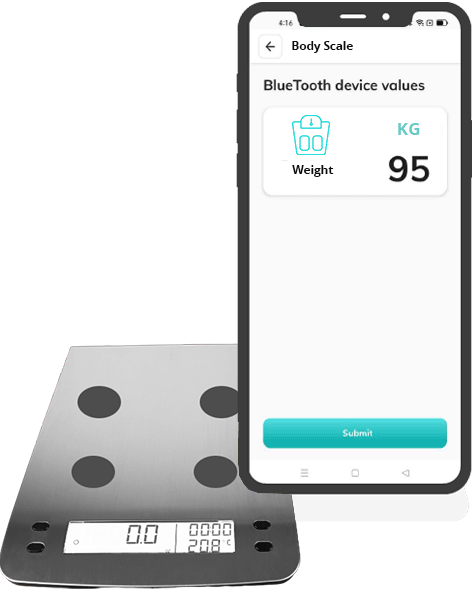
Take control of your health with the Wireless Scale. Measure, track, and share your Weight and BMI, Lean Mass, Body Fat, Muscle Mass, Bone Mass, Body Water using your smartphone or tabletWireless Body Composition Scale
Features
Integration
Request a Demo
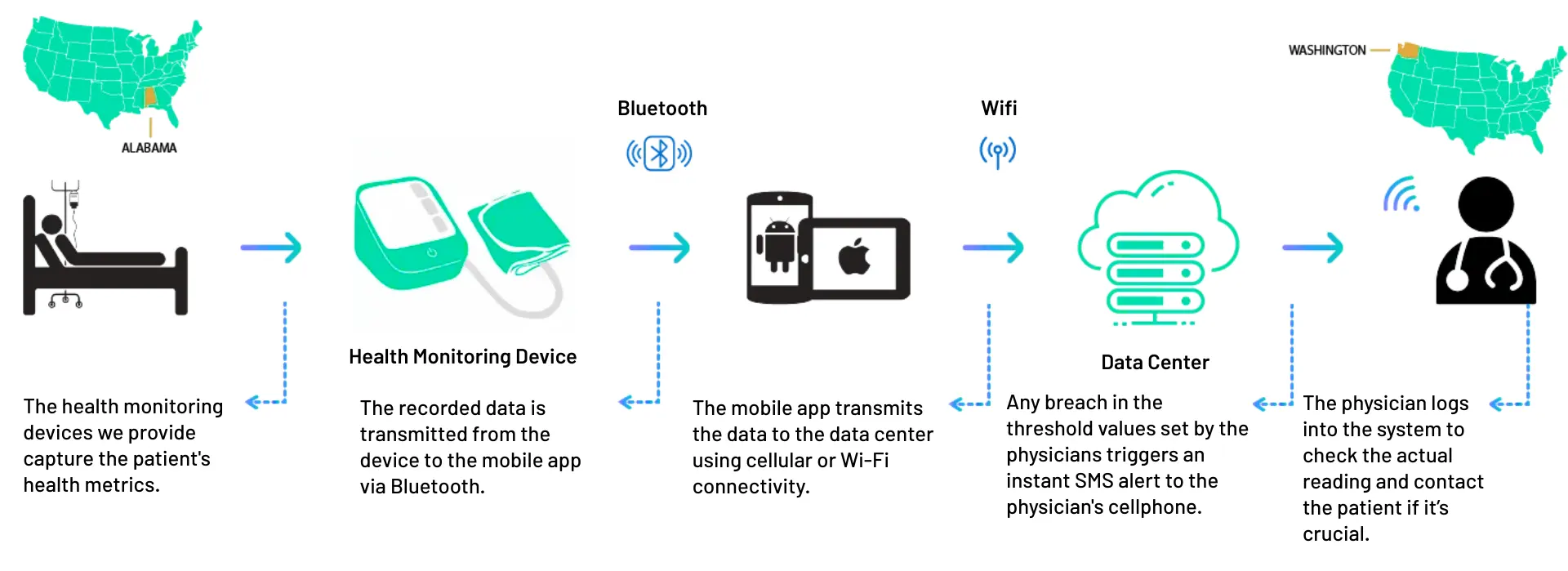
How Remote Patient Monitoring Works?
Multiple Views
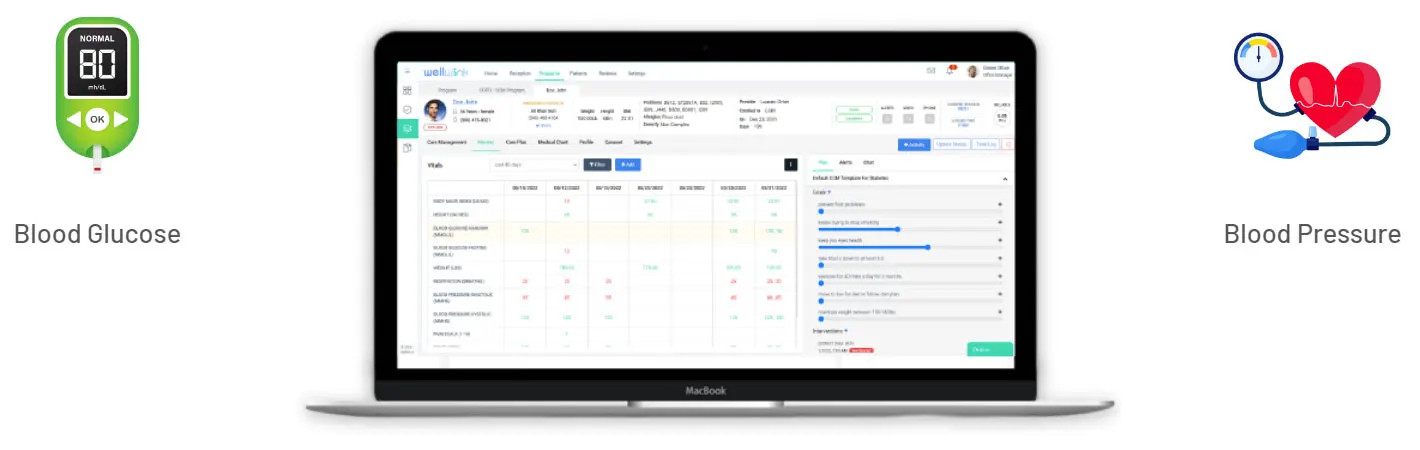
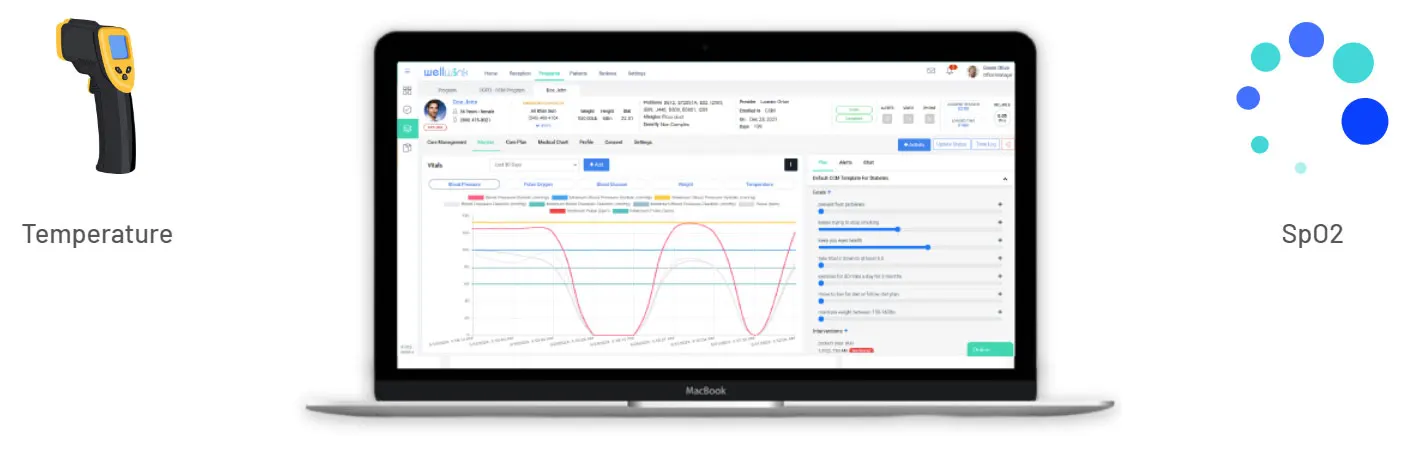
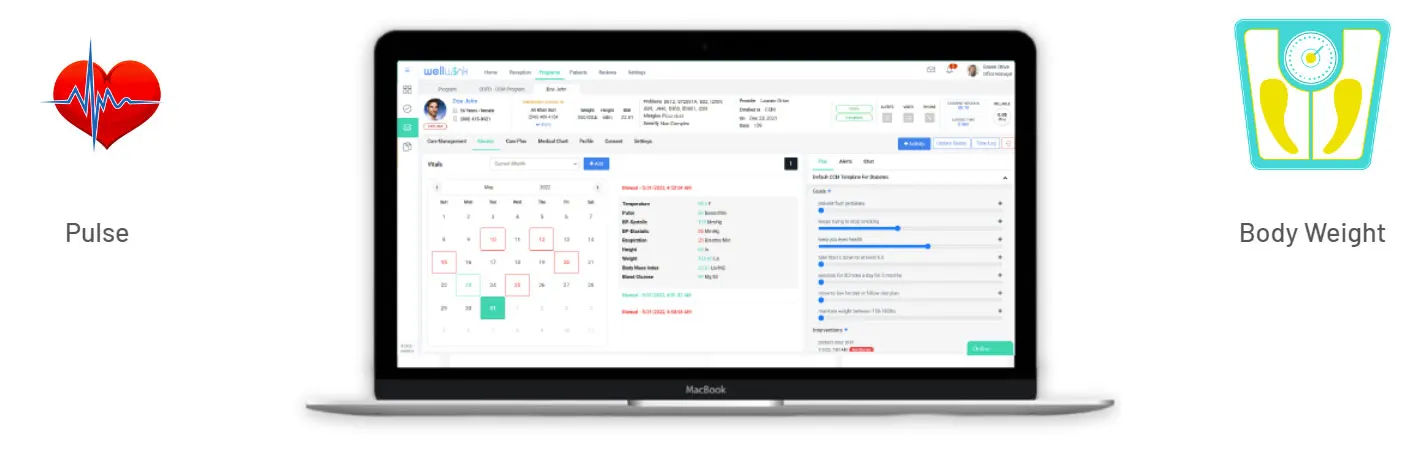
RPM patient health monitoring is simplified by viewing health data from connected devices through calendar, flowsheet, and chart views, enabling timely management and interventions.
We help make healthcare easier for practices and more patient-focused.
Request a Demo
CPT Billing Codes and Reimbursement for RPM
Non-Complex CPTs
CPT-99453
Initial set-up and patient education on use of equipment.
Billable once at time of setup.
RVU 0.55
$19.03
Medicare National Payment Amount (2025)
CPT-99454
Device(s) supply with daily recording(s) or programmed alert(s) transmission, 16 or more days a month.
Billable once every 30 days.
$55.72
Medicare National Payment Amount (2025)
CPT-99457
Remote physiologic monitoring treatment, first 20+ mins/month by clinical staff or physician, requiring interactive patient/caregiver communication.
99457’s 20 minutes includes interactive communication and care management time.
Billable once per calendar month.
RVU 1.45
$50.18
CPT-99437
Reported when an additional 20 minutes of interactive communication is provided to the patient/caregiver, and is billed in conjunction with CPT code 99457.
99458 covers each extra 20 minutes; no monthly RPM time cap per patient.
Billable for every additional 20 minutes per calendar month.
RVU 1.18
$40.84
Request a Demo
Frequently Asked Questions
What is Remote Patient Monitoring (RPM) Program?
Remote Patient Monitoring (RPM) is a program in which patients’ vital signs, symptoms and other health data are collected and transmitted to healthcare providers remotely. This allows healthcare providers to monitor patients’ health status and identify potential health issues before they become critical. The goal of the RPM program is to improve health outcomes, increase patient satisfaction, and reduce healthcare costs by reducing the need for in-person visits and hospitalizations.
RPM services typically include:
- Data collection – Collecting and transmitting vital signs, symptoms, and other health data from patients remotely using various technologies such as smartphones, tablets, or wearable devices.
- Data analysis – Analyzing the collected data to identify potential health issues and track patients’ progress over time.
- Patient engagement – Using the collected data to engage with patients and provide education and support for self-management.
- Care coordination – Coordinating with other healthcare providers to ensure that patients receive appropriate care and services.
- Follow-up and monitoring – Providing follow-up and ongoing support to help patients maintain their health and manage their condition over time.
RPM is an add-on service to the Chronic Care Management (CCM) program, and it is only available to Medicare beneficiaries who are also enrolled in the CCM program. It allows for a higher reimbursement rate for eligible physicians and other qualified practitioners who furnish these services.
It is important to note that the implementation of RPM program requires certain technical and infrastructure requirements, such as secure data transmission and storage, as well as training and support for patients and healthcare providers to use the technology effectively.
Who is eligible for RPM?
Remote Patient Monitoring (RPM) program is an add-on service to the Chronic Care Management (CCM) program and is available to Medicare beneficiaries who are also enrolled in the CCM program. To be eligible for RPM services, patients must meet the following criteria:
- They must have Medicare Part B coverage.
- They must have at least two or more chronic conditions that have been or are likely to last at least 12 months and require frequent medical attention and self-management.
- They must be seen by a primary care provider or a care manager at least once every 90 days and have a care plan established with the patient or their caregiver.
- They must be willing and able to use the devices and technology required for RPM, such as blood pressure monitors, glucose monitors, weight scales, pulse oximeters, activity trackers, medication management devices, telehealth devices, and wearable devices.
- They must not be in an inpatient setting, hospice, or receiving home health services.
It’s important to note that to bill for RPM services, the provider must meet certain requirements set by CMS such as:
Care coordination needs to be performed with other providers of the patient.
Care needs to be provided at least 20 minutes of non-face-to-face care management services each calendar month, including care coordination and communication with other providers.
RPM services can be provided by physicians, nurse practitioners, physician assistants, nurses, and care managers.
What devices are typically used for RPM?
Remote Patient Monitoring (RPM) typically uses a variety of devices to collect and transmit health data from patients remotely. Some of the most common devices used in RPM include:
- Blood pressure monitors These devices measure blood pressure and transmit the data to healthcare providers.
- Glucose monitors These devices measure blood sugar levels and transmit the data to healthcare providers.
- Weight scales These devices measure weight and transmit the data to healthcare providers.
- Pulse oximeters These devices measure oxygen saturation levels in the blood and transmit the data to healthcare providers.
- Activity trackers: These devices measure physical activity, such as steps taken and distance traveled, and transmit the data to healthcare providers.
- Medication management devices: These devices help patients keep track of when to take their medications and remind them when to take them.
- Telehealth devices: These are devices that enable remote video consultations between patients and healthcare providers.
- Wearable devices: These are devices that can be worn on the body, such as smartwatches, that can track a variety of health metrics like heart rate, sleep, and stress levels.
It is important to note that the specific devices used may vary depending on the patient’s condition and the healthcare provider’s preference. Additionally, the devices used should be FDA cleared or approved and comply with data security and privacy regulations.
What are the benefits of a RPM program?
The Remote Patient Monitoring (RPM) program has many benefits, including:
- Improved health outcomes – RPM allows healthcare providers to monitor patients’ health status and identify potential health issues before they become critical, which can help improve health outcomes and reduce the risk of hospitalization or other complications.
- Increased patient satisfaction – RPM allows patients to receive care in the comfort of their own homes, which can increase patient satisfaction and reduce the burden of traveling to appointments.
- Reduced healthcare costs – RPM can reduce the need for in-person visits and hospitalizations, which can lower healthcare costs.
- Better care coordination – RPM allows healthcare providers to coordinate care more effectively, which can ensure that patients receive appropriate care and services.
- More efficient use of resources – RPM allows healthcare providers to manage a larger number of patients with chronic conditions in a more efficient manner, which can help to optimize the use of healthcare resources.
- Greater patient engagement – RPM allows patients to be more involved in their own care, which can help to improve self-management and adherence to treatment plans.
- Better communication and follow-up – RPM enables healthcare providers to communicate with patients more frequently and follow-up on their progress, which can help to ensure that patients are receiving the care they need to manage their conditions.
- Better data collection – RPM allows healthcare providers to collect more detailed and accurate data on patient’s health, which can help to identify patterns, track progress, and make more informed decisions.
It is important to note that RPM is still a relatively new technology, and more research is needed to fully understand the benefits and cost-effectiveness of RPM programs.
What are the applicable CPT codes for RPM?
The applicable Current Procedural Terminology (CPT) codes for Remote Patient Monitoring (RPM) services in the United States are:
- 99457 – This code is used for the provision of medical evaluation and management services furnished to a patient by a physician or other clinician who is not part of the patient’s care team, using communication technology (e.g., interactive audio and video) for the evaluation and management of the patient’s health status.
- 99458 – This code is used for the provision of medical evaluation and management services furnished to a patient by a physician or other clinician who is part of the patient’s care team, using communication technology (e.g., interactive audio and video) for the evaluation and management of the patient’s health status.
- R99457 and 99458 – Can be used to bill for RPM services when the provider performs 20 or more minutes of care management services each calendar month, including care coordination and communication with other providers.
- 99457 and 99458 – Can be used in combination with codes for the collection of patient data (e.g., vital signs, weight, and oxygen saturation), management of patient-generated data, and other medical decision-making services related to the care of the patient.
It is important to note that billing for RPM services requires a high level of documentation and requires providers to meet certain requirements set by CMS. Additionally, the codes and their use may vary depending on the type of RPM services being provided and the payer policy. It is recommended that healthcare providers consult with a billing specialist for more information on coding and billing for RPM services.
What are the applicable reimbursements for RPM in 2025?
The applicable reimbursements for Remote Patient Monitoring (RPM) services in 2025 may vary based on several factors such as the type of RPM services provided, the patient population, and the specific payer. The Centers for Medicare and Medicaid Services (CMS) provides reimbursement for RPM services under the Medicare Physician Fee Schedule (PFS).
In 2025, CMS has proposed to pay for RPM services for patients with two or more chronic conditions using the following codes:
- 99457 – Reimbursement rate for medical evaluation and management services furnished to a patient by a clinician who is not part of the patient’s care team using communication technology is approximately $47.87.
- 99458 – Reimbursement rate for medical evaluation and management services furnished to a patient by a clinician who is part of the patient’s care team using communication technology is approximately $38.49.
Please be aware that these are just suggested rates and could still be changed. Besides, private payers may set various rules and rates for RPM services, which is why it is suggested that healthcare providers consult with a billing specialist to learn more about RPM reimbursement in 2025.
Resources
Wellwink Resources
Our Latest Blogs
Read the latest insights about Wellwink as well as medical blogs around the world. Our purpose is to provide education for both providers and patients.
Finding a Physician
Find a Physician and Book an Office visit or Virtual visit. We are helping healthcare communities to bridge the gap between patients and doctors.